
The Holmegaard Bow

In the late Middle Stone Age, somewhere in South Africa, our Homo Sapiens ancestors worked out the secrets of the bow and arrow. This timeline is based on complex stone blades from 71,000 years ago that resemble more recent Neolithic stone arrow heads. The bow and arrow became an important tool to help early hunter gatherers to survive the harsh flora and fauna. Between 35,000 and 8,000 BCE, archery began to develop simultaneously in multiple different global regions. In the Province of Castellón, Spain, in five different caves, you will find the one of the oldest depictions of archery in artwork dating to 35,000 BCE.1

Patricia visited these shelters and caves in 2015 as part of her ongoing research in historical archery. She met with the museum guide who took her to the shelters and explained that these hunting scene depictions were not all created at once, but instead painted at various ages, with the oldest at the bottom, and the newest at the top.
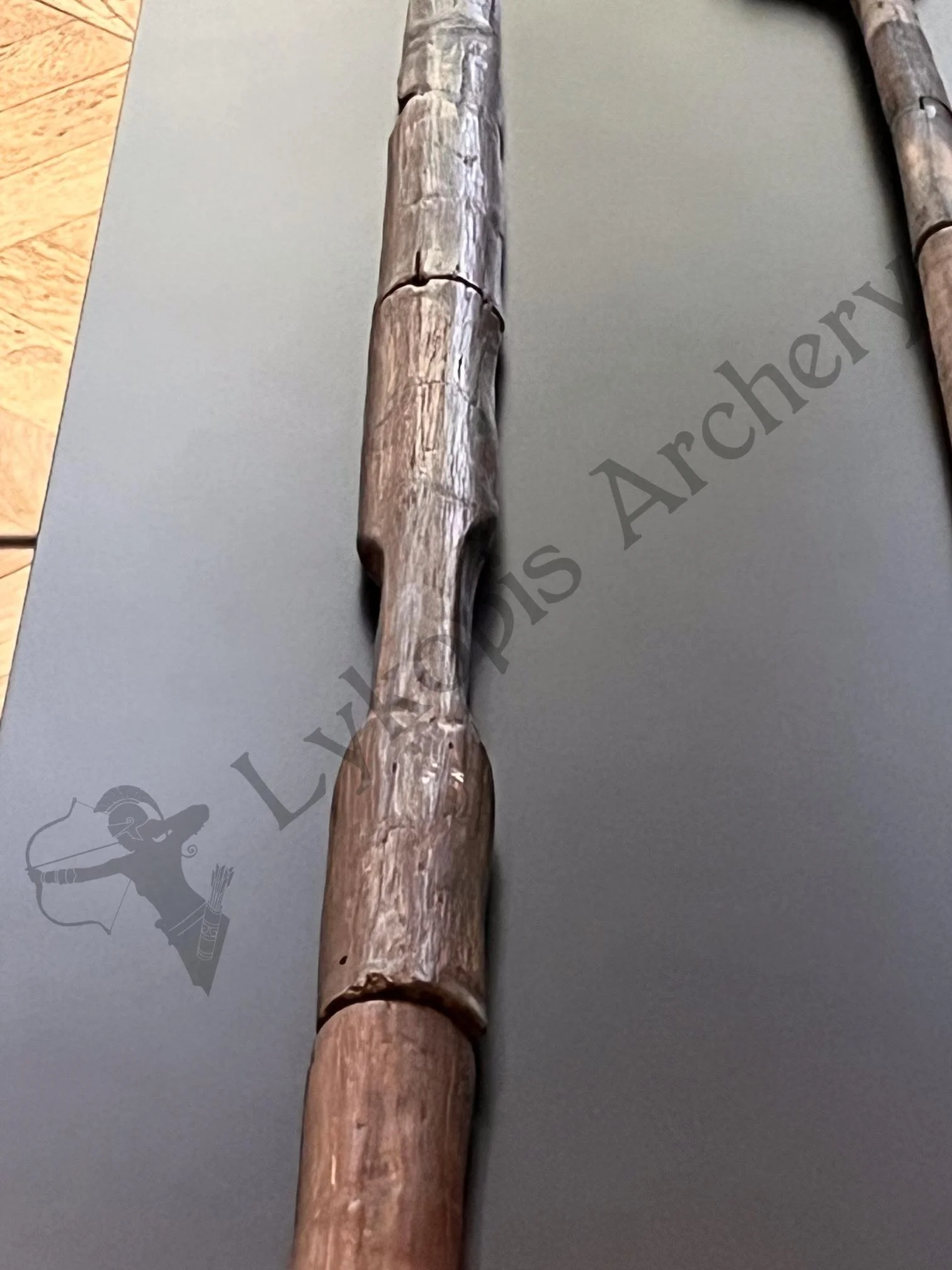
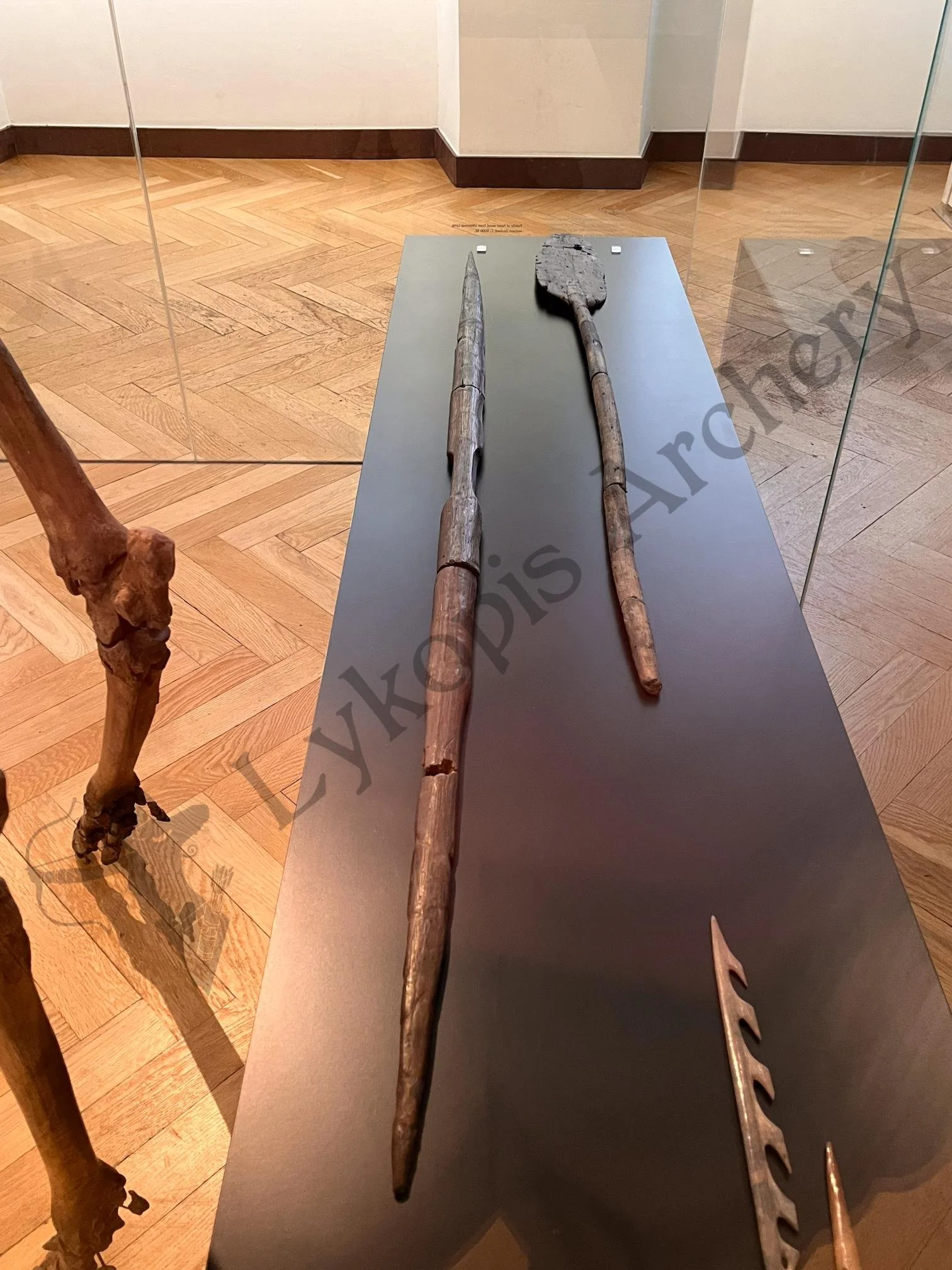
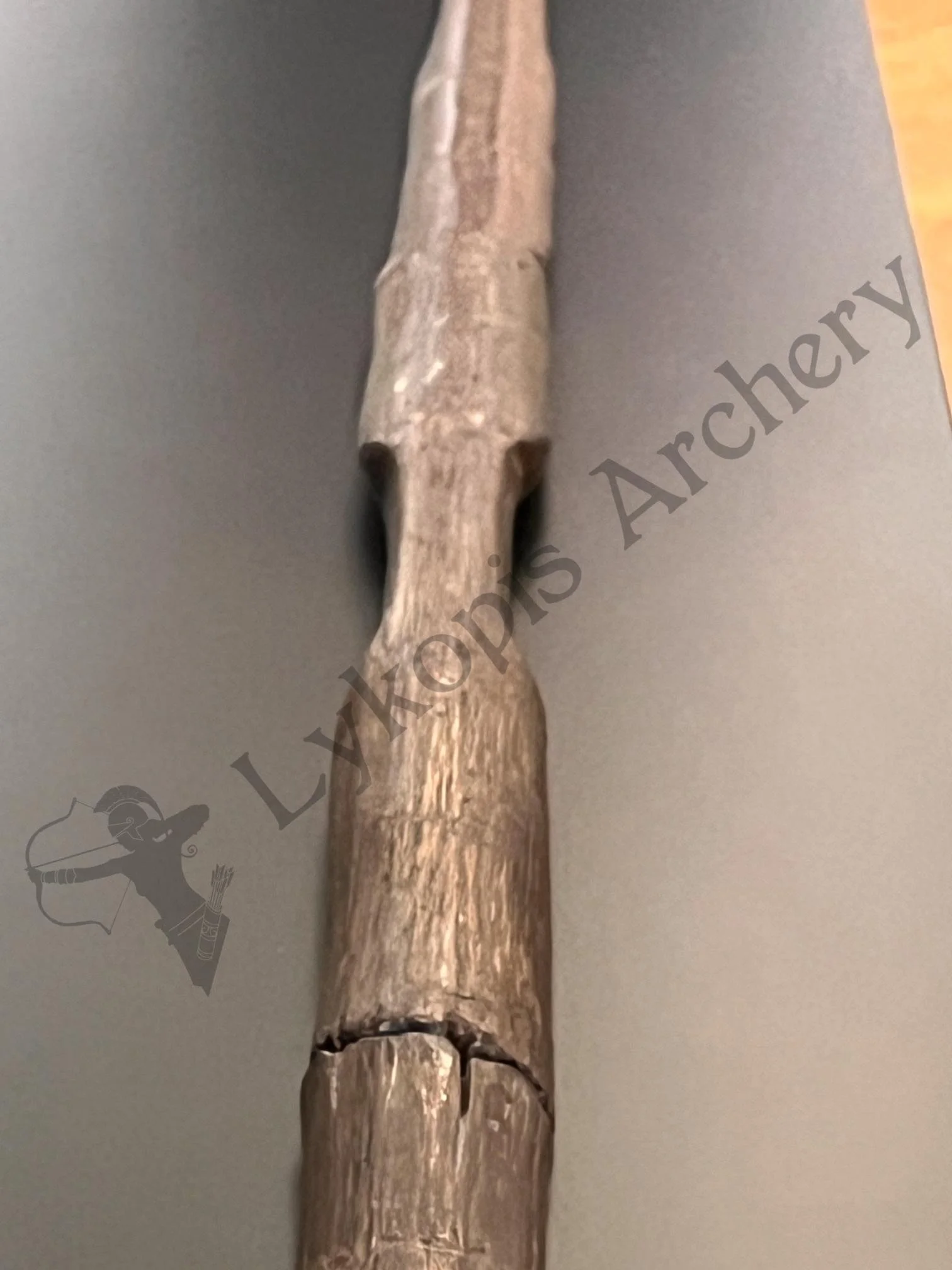
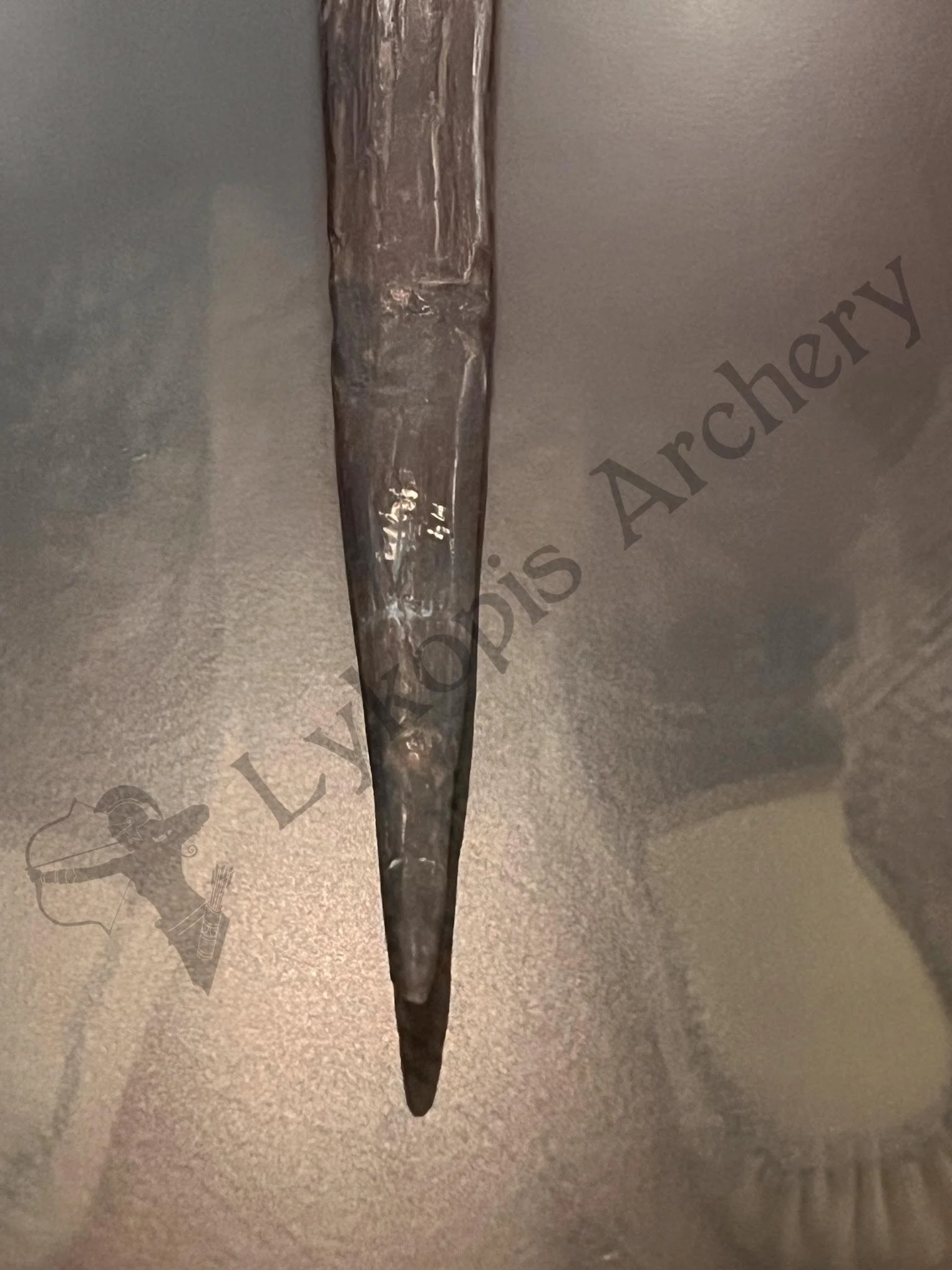
The oldest bow excavated archaeologically is the Holmegaard Bow. It is the oldest surviving bow discovered, dated to 7000 BCE in the Mesolithic Period of Scandinavia, making it around 9000 years old. On display in the Auroch Gallery of The Danish National Museum in Copenhagen, the Holmegaard Bow was discovered in 1944 in the Holmegaard Mose (a bog1) on the islands of Zeeland in Denmark2, for which it is named. It was crafted from an wych elm sapling that was growing in the shade of another tree3, leading it to develop compression wood4 as it grew sideways towards the sun.
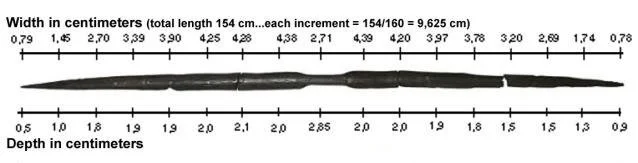
In length, it is roughly 154cm long, and is an example of what’s called a self bow, meaning it’s made from one piece of wood. The limbs are wide and flat which taper toward the tips, where the string attaches to side-nocks. The outer limbs are stiff, meaning the outer third of the limb has a squarish profile tapering into “shoulders”, transitioning into a wide flat limb with a rounded back and a flat belly. When the bow is released, these stiff outer limbs snap it back into its original profile.
The grip is transverse to the limbs, with the limbs widening into it. This creates a lever-action when the bow is drawn, with just the limbs bending but not the grip. This allows the bow to be kept at draw for an extended period of time—a benefit while hunting.
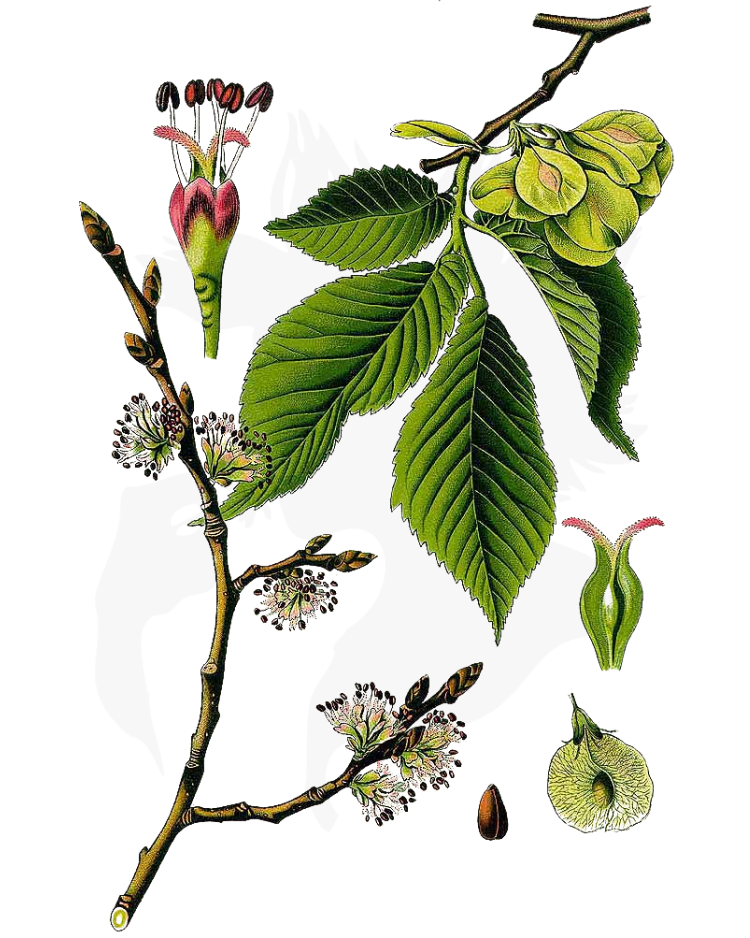
Given the climate in what is now Scandinavia during the Mesolithic, the wood used in the bow is most likely wych5 elm (Ulmus glabra6). It has the widest range of European elm species, and is also known as the Scots Elm. It is the most prolific of the European elm species, found from the north in the Arctic Circle, east to the Ural Mountains (Russia and Kazakhstan), to the south in the Peloponnese Region in Greece, to the west in Ireland. Even today, the wych elm can be found across Scandinavia.


Footnotes:
For information on the rock art sites in spain, visit Museo de la Valltorta.
Most of Vancouver built is built on a bog. In the greater lower mainland, you can also visit Burns Bog.
This is based on the wood’s growth rings. [Hardy, Prehistoric Archery, 2006]
Read more about compression wood at https://www.slideshare.net/slideshow/reaction-wood/250509351 and Arctic Bowyery - The Use of Compression Wood in Bows in the Subarctic and Acrctic Regions of Eurasia and America
Etymology from the Old English “wice”, meaning pliant or subtle. For more information on Wych Elm:
Treesure Hunt! (coming soon)
https://turismodecastellon.com/en/que-hacer/naturaleza/espacionatural/show/107062